See the full student story before application season
Club Hub gives college counselors a reliable view of each student's clubs, leadership roles, attendance, and activity history, so advising, recommendations, and activity lists are grounded in what students actually did.
Built for better advising, stronger recommendations, and less last-minute scrambling
Complete Student Profiles
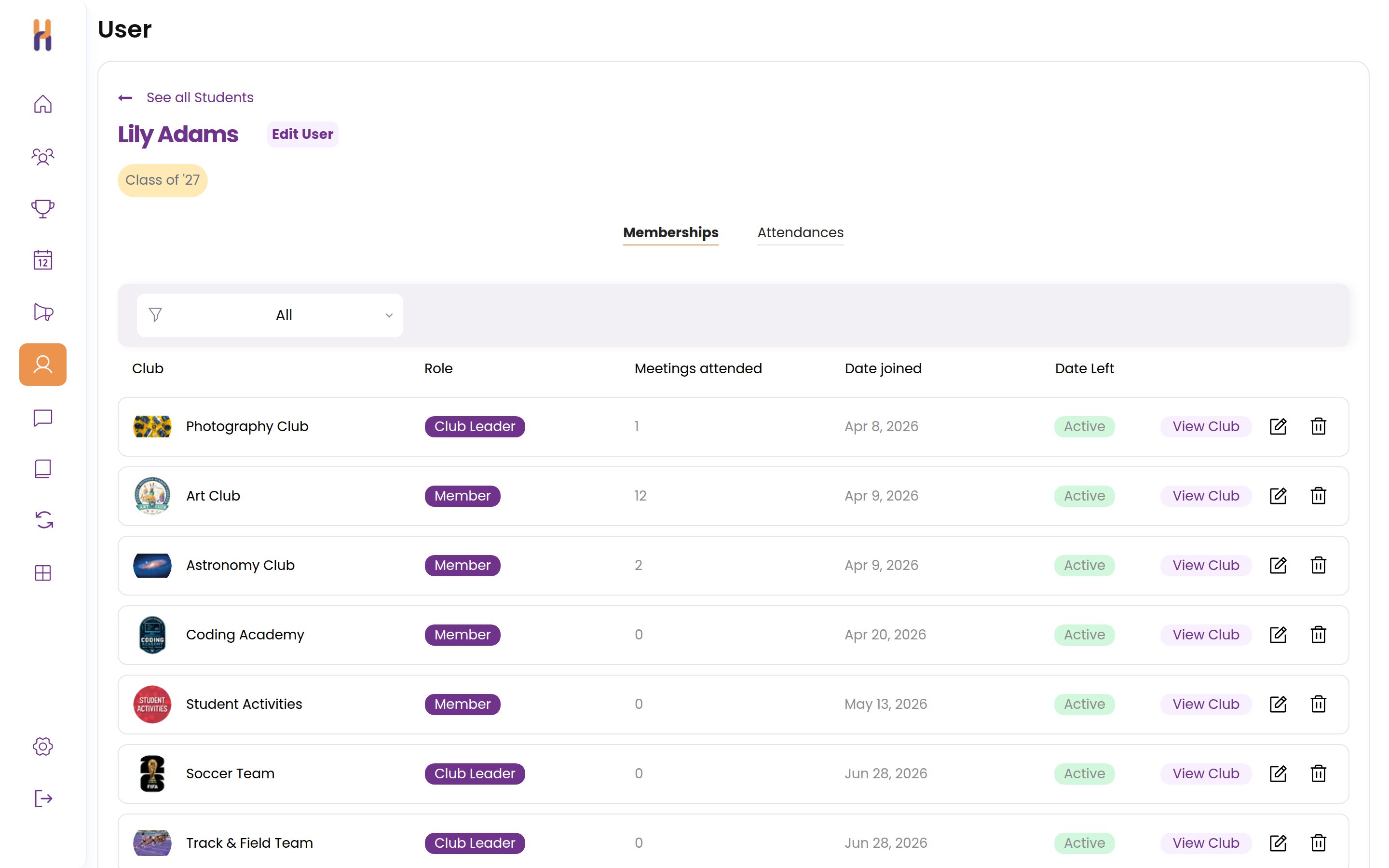
See each student's clubs, leadership roles, participation history, and activity patterns in one place, so advising conversations start with real context.
Help Students Find Their Place
Identify students who have not found meaningful involvement yet and guide them toward clubs, affinity groups, service opportunities, or leadership paths where they can belong.
More Specific Recommendation Letters
Bring real examples into counselor recommendations: sustained involvement, leadership growth, attendance, service, and contributions that might otherwise be missed.
Stronger Activity Lists
Help juniors and seniors turn their involvement history into a clear, accurate activities list without relying on memory or last-minute forms.
Keep Your Advisees Organized
Create private groups for your advisees, share reminders, schedule check-ins, and keep counseling-related communication in one place.
Ready for Application Season
When application season starts, students and counselors already have a reliable record of clubs, roles, participation, and leadership history ready to review.
Start Every Advising Conversation with the Full Picture
Instead of asking students to remember every club, event, and leadership role from the past four years, counselors can open a student profile and see the involvement record as it developed.
Understand Commitment Over Time
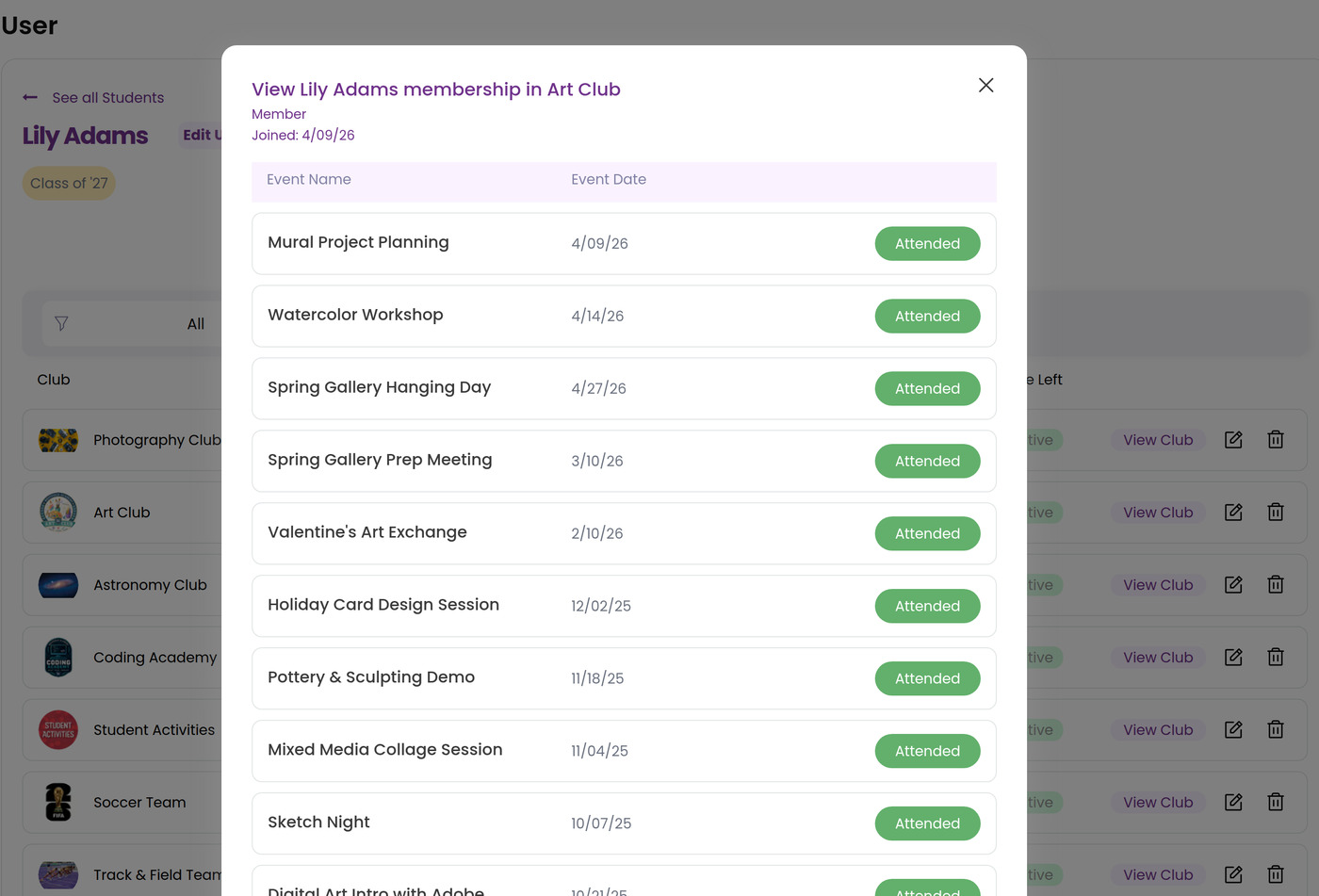
See whether a student's involvement was occasional, consistent, or leadership-level. Click any membership on a student's profile to see their meeting-by-meeting history in that club, so counselors can understand commitment with more nuance than a club name alone.
Manage Your Advisees Without Another Spreadsheet
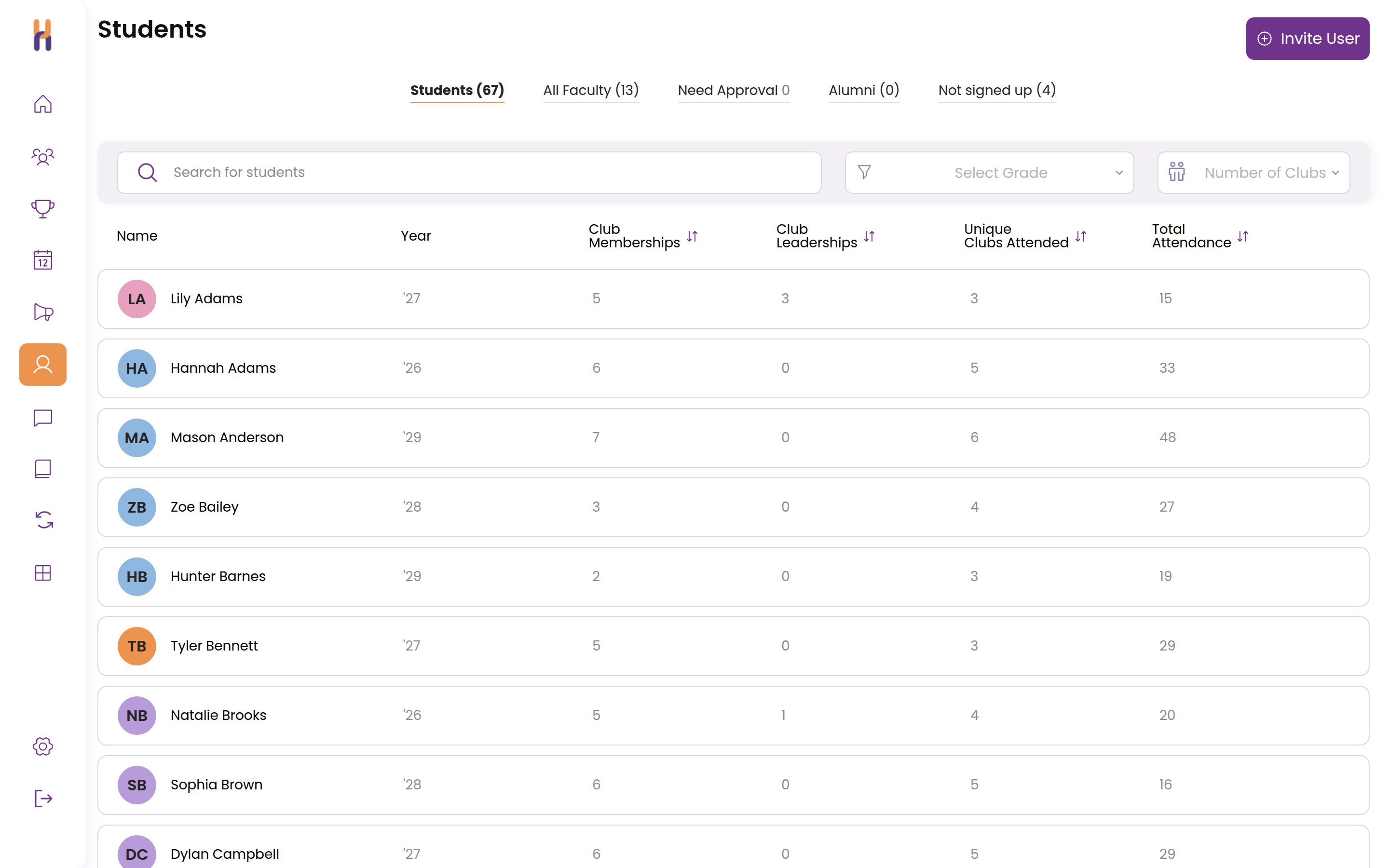
Filter students by class year, build a private advisory group, share announcements, and keep reminders or meetings organized alongside the student involvement data you already need.
Application Season
From involvement record to application story
A student's activity list is strongest when it reflects real growth: what they joined, where they stayed consistent, when they stepped into leadership, and how they contributed. Club Hub gives counselors the raw material to help students tell that story clearly and honestly.
With the record in front of you
Review clubs, roles, and participation history
Identify leadership and consistency
Help students choose which activities to highlight
Add specific context to recommendations
Support students who undersell their own involvement
See quieter forms of involvement
Not every student is the loudest leader in the room, but consistent participation, service, mentoring, and club commitment can still be part of a strong student story. Club Hub helps counselors notice the students who show up week after week without ever asking for the spotlight.
Earlier Intervention
Catch under-involvement before senior year
By the time applications are due, it is often too late to help a student build meaningful involvement. Club Hub helps counselors and student life teams see which students are already deeply involved, which are still searching for their place, and who may need a nudge before application season arrives.
“As a college counselor, Club Hub helps me keep track of which clubs are offered, which ones are official, who the mentors are, and which students are involved.”
Faculty & College CounselorKing School
FAQ
College Counseling FAQ
How does Club Hub help college counselors?
Club Hub gives counselors a reliable view of each student's clubs, leadership roles, attendance, and activity history. That helps with advising conversations, recommendation letters, activity lists, and early support for students who have not yet found meaningful involvement.
Can counselors see a student's full involvement history?
Yes. Counselors can review the clubs a student has joined, roles they have held, events or meetings they participated in, and how their involvement changed over time.
How does this help with recommendation letters?
Counselors can write with more specific context. Instead of relying only on student questionnaires or memory, they can reference real involvement, leadership, consistency, and contributions across the student's time at school.
How does this help students complete activity lists?
Students and counselors can review a clear record of clubs, roles, and participation before completing applications. That makes it easier to build an accurate activity list and decide which commitments are most important to highlight.
Can counselors identify students who are not involved yet?
Yes. Schools can use Club Hub to see which students have not joined clubs or activities, making it easier to guide them toward opportunities earlier.
Does this replace our college counseling platform?
No. Club Hub does not replace your college counseling platform. It gives your counseling team the student involvement context those systems usually do not capture, supporting advising, recommendations, and application preparation.
Can counselors create private groups for their advisees?
Yes. Counselors can organize advisees into private groups for announcements, reminders, meetings, and communication.
Is attendance required for this to be useful?
No. Club Hub is useful even as a record of clubs, roles, and student leadership. When schools also use attendance, counselors get an even clearer picture of consistency and commitment.
Give your counseling team the full picture
A 30-minute demo tailored to your school. No commitment.